You know the grammar. You have vocabulary. But when you walk into a restaurant, a bakery, or a doctor's office in France, you panic. You do not know what to say, in what order, or which words to use.
The problem is not your level. It is that nobody has shown you what a real French conversation looks like - not a textbook dialogue with « Bonjour, je m'appelle Pierre, j'ai 25 ans », but a real interaction, with hesitations, set phrases, and natural rhythm.
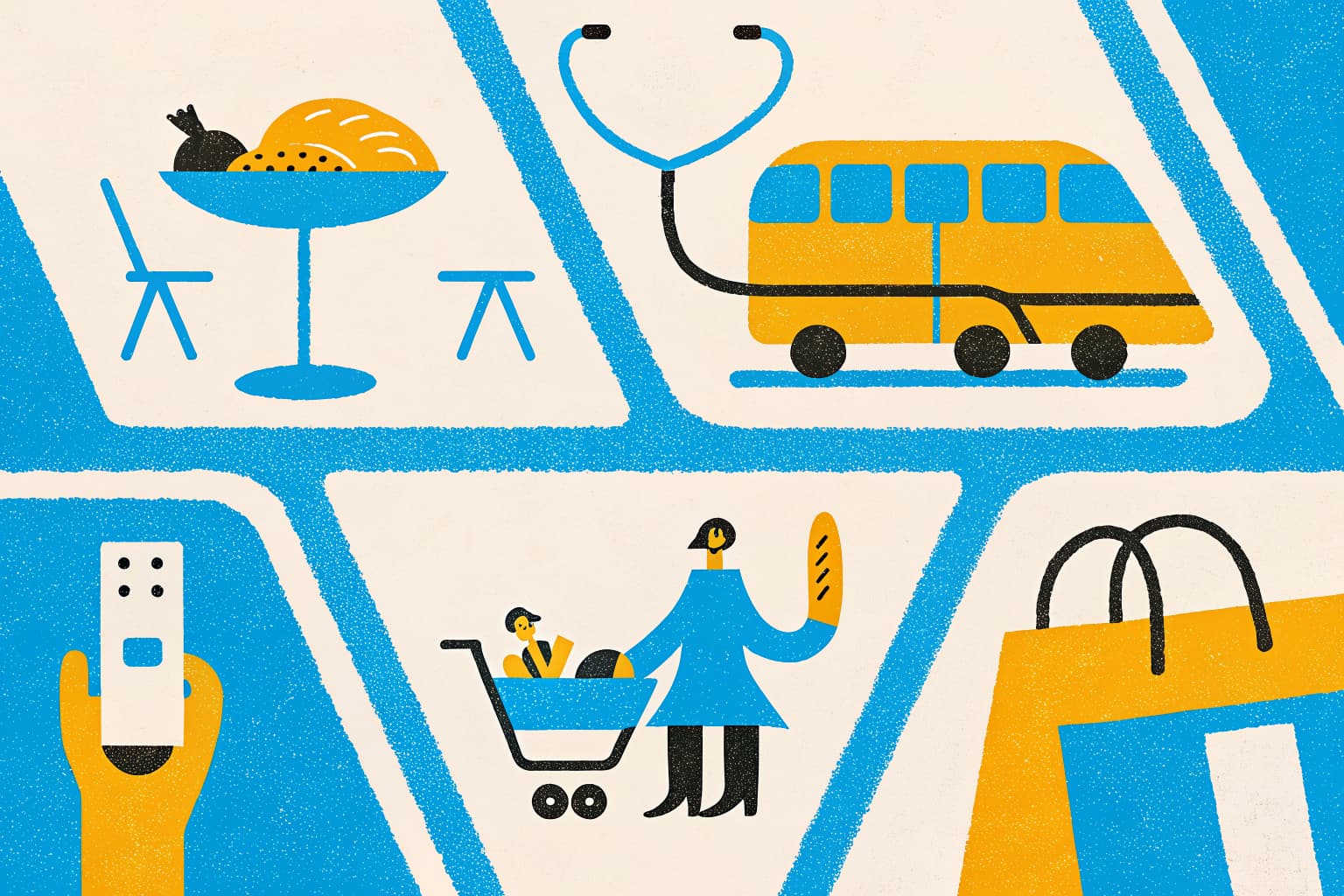
To get by in everyday French, you need to master about ten key situations: ordering at a restaurant, buying at a bakery, seeing a doctor, making a phone call to a company, using public transport, shopping in a store, mailing a package at the post office, and introducing yourself to someone. Each situation has its own vocabulary, politeness formulas, and traps that textbooks do not explain.
At the restaurant - ordering a meal
This is THE situation everyone dreads. Here are the essential phrases:
- « J'ai une réservation au nom de... » - to announce your arrival
- « Je vais prendre la formule entrée + plat. » - to order (a « formule » is a set menu)
- « Qu'est-ce que vous avez comme plat du jour ? » - to ask about the daily special
- « Une carafe d'eau, s'il vous plaît. » - free in France, it is your right
- « L'addition, s'il vous plaît. » - to ask for the bill
Watch out for this classic trap:
- ❌ « Les courses du menu » (borrowed from the English word "courses")
- ✅ « Les plats du menu » - in French, « les courses » means grocery shopping at the supermarket
Another common mistake: saying « visiter un restaurant ». In French, you use visiter for a monument or a city. For a restaurant, you say « aller dans un restaurant » or « aller au restaurant ».
At the bakery
A mandatory stop in France. Here is how it goes:
- « Bonjour, j'aimerais une tradition, s'il vous plaît. » - a « baguette tradition », not a regular baguette
- « Vous la voulez bien cuite ? » - the baker always asks how well-done you want it
- « Je voudrais deux parts de tarte au citron. » - for pastries
- « Je vous emballe ça. » - what the baker says ("I'll wrap that up for you")
Trap:
- ❌ « Une boulangerie qui offre une baguette à ce prix »
- ✅ « Une boulangerie qui vend une baguette à ce prix » - « offrir » means to give as a gift for free
At the doctor's office
Seeing a doctor in France is not something you can improvise. The key phrases:
- « J'ai mal à l'oreille depuis une semaine. » - to locate the pain
- « J'ai le nez qui coule et des maux de tête. » - to describe symptoms
- « Je vais vous ausculter. » - what the doctor says ("I'm going to examine you")
- « Je vais vous prescrire un antibiotique. Voici l'ordonnance. » - the diagnosis and prescription
- « Je vais vous mettre en arrêt maladie. » - if it is serious (a doctor's note excusing you from work)
The mistake I correct most often:
- ❌ « Elle a visité le médecin »
- ✅ « Elle est allée chez le médecin »
Rule: for people and professionals, use « chez »: chez le médecin, chez le dentiste, chez le coiffeur. Never « au médecin » or « visiter le médecin ».
On the phone - calling a company
Speaking French on the phone is a nightmare for many learners. The standard phrases:
- « Bonjour, David à votre écoute. » - how the agent answers
- « J'aimerais savoir si vous faisiez de la vente à emporter ? » - the « imparfait de politesse » (polite imperfect tense)
- « Je peux vous demander la référence de voyage ? » - asking for a reference number
- « Ça marche. Merci et à tout à l'heure. » - confirming and hanging up
Preposition trap:
- ❌ « Je déteste parler sur téléphone » (calque from "on the phone")
- ✅ « Je déteste parler au téléphone »
Public transport
Getting a pass, buying a ticket, changing trains - each situation has its own vocabulary:
- « Je vous contacte pour souscrire à un passe Navigo. » - to get a subscription
- « Mon train a été annulé. J'aimerais procéder à un échange. » - in case of a problem
- « Est-ce que vous avez votre RIB sous la main ? » - you will often be asked for your bank details (RIB)
- « Vous devrez aller à un guichet pour récupérer votre carte. » - not everything can be done online
Classic mistake:
- ❌ « Le métro ne te rendra pas partout »
- ✅ « Le métro ne t'emmènera pas partout » - « rendre » does not mean "to take somewhere"
In a shop
Buying something in France is quite a ritual:
- « Je cherche le rayon des jeux d'échecs. » - asking for a department (« rayon »)
- « On est en rupture de stock. » - when the item is out of stock
- « Je vous réserve une boîte. Venez avec moi en caisse. » - the salesperson helps you to the checkout
- « Vous voulez payer en carte ? » - time to pay
Trap:
- ❌ « Que c'est haut de prix ! »
- ✅ « Que c'est cher ! » or « C'est hors de prix ! » - the expression is « hors de prix » (outrageously expensive), not « haut de prix »
At the post office
Sending a package from France:
- « Je voudrais envoyer ce colis en Angleterre. » - explaining your request
- « Vous l'avez déjà pesé ? Vous avez fait la déclaration de douane ? » - the agent's questions
- « Vous refaites la file pour me donner le colis. » - yes, this actually happens in France
- « Je voulais également acheter un carnet de timbres. » - « un carnet » = a booklet of 10 or 12 stamps
Introducing yourself to someone
The first meeting is the foundation:
- « Salut, je m'appelle Zoé. Enchantée. » - informal
- « Je suis originaire de Bretagne. » - talking about where you are from
- « Ça m'a fait plaisir de faire ta connaissance. » - when leaving ("It was nice meeting you")
Do not forget: in France, you always say « Bonjour » when entering a shop, a doctor's office, or a restaurant. Not greeting people is considered rude.
The most common mistakes in these situations
From correcting my students, I have noticed 4 recurring traps in everyday conversations:
1. Using « visiter » for everything
- ❌ « Visiter un restaurant / visiter le médecin / visiter un ami »
- ✅ « Aller au restaurant / aller chez le médecin / rendre visite à un ami »
In French, « visiter » is reserved for tourist attractions: visiter Paris, visiter un musée. For people: « rendre visite à ». For shops and businesses: « aller dans / aller à ».
2. « Offrir » instead of « proposer »
- ❌ « Il offre de rapprocher la voiture »
- ✅ « Il propose de rapprocher la voiture »
In English, "to offer" means to suggest doing something. In French, « offrir » means to give as a gift. When you want to say "to offer to do something", use « proposer de faire quelque chose ».
3. « Chez » for professionals
- ❌ « Je vais au coiffeur / au médecin / au garagiste »
- ✅ « Je vais chez le coiffeur / chez le médecin / chez le garagiste »
4. Prepositions borrowed from English
- ❌ « Parler sur téléphone » → ✅ « Parler au téléphone »
- ❌ « Se garer sur la rue » → ✅ « Se garer dans la rue »
- ❌ « Envoyer un message envers ma sœur » → ✅ « Envoyer un message à ma sœur »
NB: All the dialogue excerpts in this article come from real conversations recorded for the 360 French Immersion course. It features 60 authentic everyday dialogues, each with 7 activities (karaoke, dictation, pronunciation with AI scoring, quiz, AI coach, spaced-repetition vocabulary, and roleplay). If you want to practise these situations with audio and interactive exercises, you can try it free for 15 days.