If you're learning French, you've probably asked yourself: should I use Babbel or Duolingo? It's the most common question in every French learner forum, Reddit thread, and YouTube comment section. And the answers are usually either "Duolingo because it's free" or "Babbel because it's more serious." Neither of those is particularly helpful when you're trying to make an actual decision.
We've used both apps extensively - as French teachers, as content creators, and as people who test language tools for a living. We've also worked with hundreds of students who've used one or both of these apps before coming to us for help. The truth is more nuanced than "one is better than the other." They do different things well, they fail at different things, and for a specific (but very common) learning goal, neither of them is the right answer.
Duolingo is better if you want a free, gamified way to start learning French from zero. Babbel is better if you want structured grammar explanations and practical conversation scenarios. But neither app prepares you to understand real spoken French at native speed - for that, you need a tool built around authentic dialogues, like 360 French Immersion.
Duolingo at a Glance
Best for: Complete beginners (A0-A1) who want a free, low-commitment introduction to French.
Duolingo is the most downloaded language app in the world. Its core promise is simple: learn a language for free, in five minutes a day, while having fun. And for the first few weeks of learning French, it delivers on that promise surprisingly well.
The app uses gamification to keep you coming back: streaks, XP points, leaderboards, hearts, and a green owl that guilt-trips you when you skip a day. Lessons are short (3-5 minutes), built around translation exercises, matching games, and multiple-choice questions. You pick up basic vocabulary and simple sentence patterns almost without realizing it.
Recent updates have added AI-powered features (Duolingo Max) that let you practice conversation with a chatbot and get explanations for your mistakes. The French course is one of Duolingo's most developed, with a deep skill tree that technically covers material up to B2.
Strengths: Free and genuinely usable. Outstanding gamification that builds daily habits. Huge French course with thousands of exercises. Bite-sized lessons that fit any schedule.
Weaknesses: Repetitive exercise formats. Audio uses text-to-speech, not real French speakers. Grammar is taught through patterns rather than explanations. A high streak count creates an illusion of fluency that doesn't match real-world ability. Read our full Duolingo review.
Babbel at a Glance
Best for: Learners (A1-B1) who want clear grammar explanations and structured progression toward practical conversations.
Babbel takes the opposite approach from Duolingo. Where Duolingo gamifies, Babbel teaches. Every lesson includes explicit grammar explanations written by linguists, practical dialogue scenarios, and a clear progression through the CEFR levels. It feels more like taking a structured course than playing a game.
The app focuses on practical, real-world situations: ordering food, making a doctor's appointment, navigating the metro, booking a hotel. Each lesson introduces vocabulary and grammar in context, then drills them through speaking, writing, and listening exercises. The speech recognition feature gives pronunciation feedback, though it's fairly basic compared to dedicated pronunciation tools.
Babbel's French course is designed specifically for French - not adapted from a generic template. The content was built by a team of linguists and French teachers, and it shows in the quality of the grammar explanations and the relevance of the dialogue scenarios.
Strengths: Best-in-class grammar explanations integrated into every lesson. Practical, scenario-based learning. CEFR-aligned progression. Designed specifically for French by linguists.
Weaknesses: No free tier (only a limited trial). Content thins out past B1. Dialogues are scripted and spoken at a slow, learner-friendly pace. Less engaging than Duolingo's gamification for people who need external motivation.
Head-to-Head Comparison
Price
This is where Duolingo has an undeniable advantage. Duolingo's free tier is genuinely functional. You can work through the entire French course without paying a cent - you'll just deal with ads and a limited number of "hearts" (attempts) per session. Super Duolingo ($7-13/month, depending on your country) removes the ads and hearts, but it's optional.
Babbel has no real free option. After a short trial, you need a subscription: roughly $14/month, or about $84/year if you pay upfront. Babbel occasionally offers lifetime access deals around $200-300.
Verdict: If budget is your primary concern, Duolingo wins by default. It's the only serious French learning app that's genuinely free. But "free" comes with trade-offs, as we'll see below.
Grammar Teaching
This is Babbel's strongest card. Every Babbel lesson includes a grammar section that explains the rules behind what you're learning - conjugation patterns, agreement rules, when to use "le subjonctif" versus "l'indicatif", why you say "je suis alle" with etre instead of avoir. The explanations are concise, written in plain English, and always connected to what you just practiced.
Duolingo takes a different approach: immersion-style grammar learning. You absorb patterns through repetition rather than explicit instruction. There are "tips" sections buried in the course, but they're easy to miss and intentionally minimal. Duolingo's philosophy is that you'll internalize grammar the way a child does - through exposure. The problem is that adults learning a second language aren't children, and explicit instruction has been shown to accelerate learning significantly.
Verdict: Babbel wins clearly. If you want to understand why French grammar works the way it does - not just pattern-match through exercises - Babbel explains it far better.
Vocabulary
Both apps build vocabulary effectively, but in different ways. Duolingo has the volume advantage: its French course contains thousands of words organized into hundreds of skills. You encounter vocabulary through translation exercises, image matching, and fill-in-the-blank questions. Duolingo also uses spaced repetition to review words you've learned, which is a proven technique for long-term retention.
Babbel introduces fewer words but contextualizes them better. Vocabulary is taught within practical scenarios, so you learn not just what a word means but when and how to use it. Each word comes with an example sentence and audio pronunciation by a native speaker. Babbel also groups vocabulary thematically - you'll learn all the words for navigating a French train station in one lesson, rather than encountering "quai" randomly between "pomme" and "chien".
Here's a concrete example of the difference. Duolingo might teach you the word "billet" through a sentence like "J'ai un billet". Babbel teaches the same word inside a full scenario: buying a ticket at the SNCF counter, asking about first class versus second class, dealing with a "correspondance" (connection). You leave the lesson knowing not just the word, but the entire interaction.
Verdict: A slight edge to Duolingo on sheer volume. But Babbel's contextual approach means you're more likely to actually remember and use the words you learn. For practical vocabulary - the words you need in real French situations - Babbel is more efficient.
Speaking Practice
Babbel includes speech recognition in most lessons. You read a sentence aloud, and the app evaluates your pronunciation. It's not perfect - the feedback is binary (correct or not) rather than granular - but it means you're actively producing French sounds in every session. This matters more than most people realize: speaking practice is the skill most learners avoid, and Babbel makes it unavoidable.
Duolingo's speaking exercises are more limited. You repeat sentences, and the app checks if it understood you, but the bar is low - it will often accept heavily accented pronunciation that a French person would struggle to understand. Duolingo Max (the premium AI tier, available on iOS and Android) adds a conversation feature where you can chat with an AI, but it's an upsell on top of an already paid subscription and the pronunciation feedback remains minimal.
One important point about pronunciation for French specifically: French has sounds that don't exist in English - the "u" in "tu", the "r" in "rouge", the nasal vowels in "bon", "vin", "un". Neither app teaches these sounds explicitly. Babbel's speech recognition at least forces you to attempt them regularly. Duolingo lets you skip speaking exercises entirely if you prefer.
Verdict: Babbel has a clear edge for speaking practice built into the core experience. Neither app offers the kind of granular pronunciation feedback (a score per phrase, comparison with a native recording) that serious pronunciation work requires.
Listening Comprehension
This is where both apps share the same fundamental limitation. Duolingo uses text-to-speech (TTS) for much of its French audio. The voice is clear, well-paced, and perfectly articulated - nothing like how French people actually talk. You're training your ear on synthetic French that no real person speaks.
Babbel uses recorded audio from real speakers, which is better than TTS. But the recordings are designed for learners: slow, clearly enunciated, with clean diction. While this is helpful at the A1-A2 level, it creates a false confidence. You understand every word in the app, then step off the plane at Charles de Gaulle and can't follow a single announcement.
Neither app exposes you to French spoken at real native speed - the speed at which French people actually talk to each other. The liaisons, the elisions, the words that blend together, the sentences that end before you've finished processing the beginning. This gap is the single biggest complaint of French learners who've spent months on these apps: "I understand everything in the app but nothing in real life."
Verdict: A draw, and not a flattering one. Duolingo's TTS is artificial. Babbel's recorded audio is real but slow. Neither prepares your ear for the actual sound of French conversation.
Motivation and Consistency
Duolingo is, without question, the king of habit-building. The streak system is borderline addictive. Leagues create social competition. The XP system turns every lesson into a mini-achievement. Duolingo has essentially solved the problem of getting people to open a language app every day.
Babbel relies on intrinsic motivation. The lessons are satisfying because they're well-designed and you can feel yourself learning. But there's no streak counter screaming at you, no leaderboard, no owl sending passive-aggressive notifications. If you skip a week, Babbel won't guilt-trip you into coming back.
Verdict: Duolingo wins for external motivation. If you struggle to build a daily habit, Duolingo's gamification genuinely works. If you're self-motivated and prefer substance over streaks, Babbel's quieter approach may suit you better.
Content for French Specifically
Babbel's French course was built from the ground up for French learners. The scenarios reflect real French life - not generic European situations translated into French. You'll practice navigating the French healthcare system, understanding French work culture, and dealing with French administrative headaches (and there are many). The course also covers cultural nuances that matter in real interactions - the importance of "vouvoiement" (formal "you") in professional settings, how to greet people properly with "la bise", and the unwritten rules of French politeness that can make or break a first impression.
Duolingo's French course is extensive, but it follows the same template as every other Duolingo language. The first few units feel generic: colors, animals, food, family. The French-specific cultural content comes later and is thinner. Duolingo added a "stories" feature that includes some French cultural scenarios, but it's a supplement, not the core experience. If you only use Duolingo, you might arrive in France knowing the word for "apple" but not knowing that you should always greet the shopkeeper before asking for anything.
Verdict: Babbel has the edge for French-specific content. The cultural context and practical scenarios feel more relevant to someone who actually plans to use French in France or with French speakers.
The Gap Neither App Fills
Here's what neither Babbel nor Duolingo will tell you on their marketing pages: both apps top out around B1-B2 in practical terms, and neither prepares you for the single most important skill in real-world French - understanding native speakers talking at normal speed.
This isn't a knock on either app. They're designed for different goals: Duolingo for habit-building and basic vocabulary, Babbel for grammar and structured learning. But neither was built to bridge the gap between "I understand my textbook" and "I understand the waiter, the taxi driver, and the group of friends chatting at the next table."
That gap is enormous, and it's where most French learners get stuck. You've done your Duolingo streak for 300 days. You've completed Babbel's B1 course. You can read a French menu, conjugate verbs, and write a simple email. Then you visit France and realize you can't follow a two-minute conversation between two French people.
The reason is simple: real French sounds nothing like app French. Native speakers use liaisons that merge words together, drop syllables, speak in half-sentences, and run words into each other at a pace that makes clean, app-speed audio sound like a foreign language by comparison.
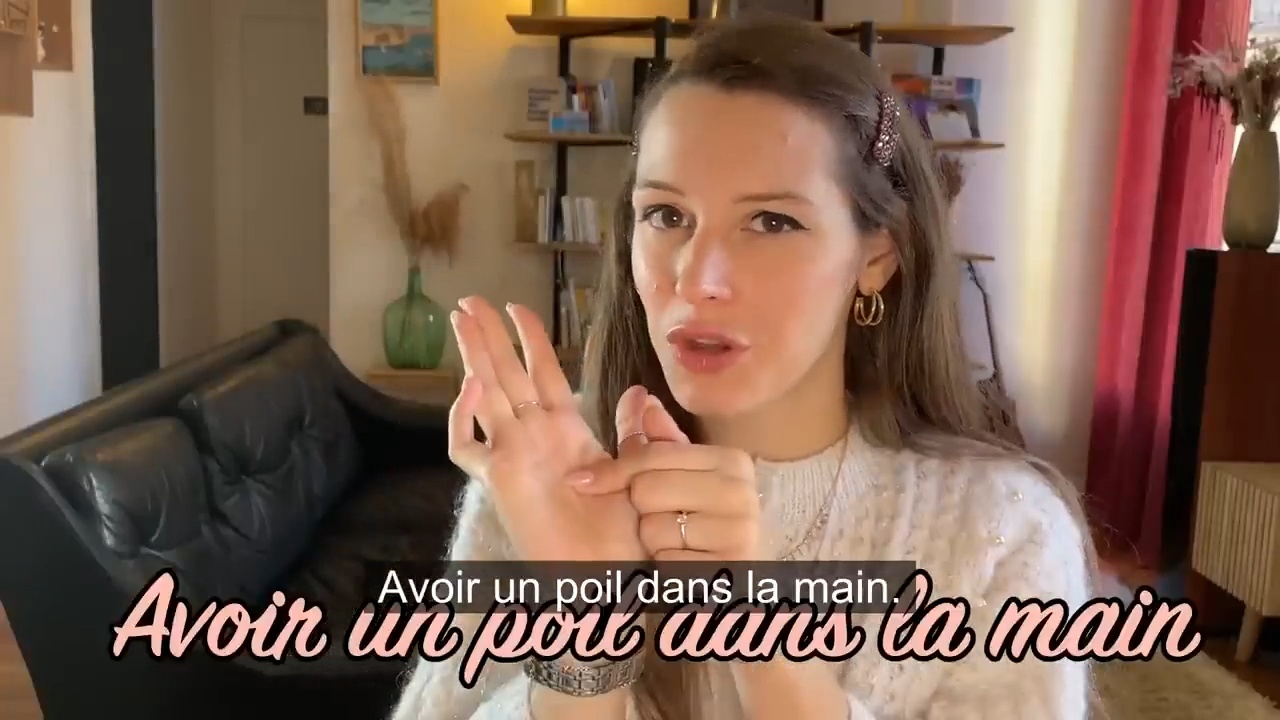
This is exactly the problem 360 French Immersion was built to solve. Created by Elisabeth, a French teacher with 300,000 YouTube subscribers and years of one-on-one coaching, the program is built around 60 authentic dialogues recorded at real native speed. Not textbook speed, not learner speed - the speed at which French people actually speak.
The method works in three steps, 15 minutes a day:
- Listen - Watch 60 native dialogues with word-by-word karaoke subtitles that highlight each word as it's spoken. Your ear learns to parse real French in real time.
- Talk to Jean - Real-time conversation with Jean, an AI that adapts to your level, answers you and corrects you. Not a generic chatbot - a conversational AI trained to actually help you practice speaking.
- Guided path - A custom path, week by week, that tells you exactly what to do each day so you progress without getting lost.
360 French Immersion covers levels A2 to C1 across 30 real-life themes - from everyday errands to workplace discussions to dinner-table debates. It's not a replacement for Duolingo or Babbel at the beginner level. It's what comes after - the tool that bridges the gap between app French and real French.
Pricing: €15.75/month, with 7 days free (cancel anytime) and a 15-day money-back guarantee if it doesn't work for you. That's roughly the same monthly price as Babbel or Super Duolingo - but with authentic content and Jean talking to you for real.
Try 360 French Immersion free for 7 days
Our Recommendation
There's no single "best" app. The right choice depends on where you are and what you need:
- You're a complete beginner with zero budget - Start with Duolingo. It's free, effective for basics, and the gamification will help you build the daily habit that matters most at the start.
- You're a beginner who wants to understand the grammar - Go with Babbel. The explanations are clearer, the content is more practical, and you'll build a stronger foundation. Worth the subscription if you can afford it.
- You've done the apps but can't understand real French - That's where 360 French Immersion comes in. If you can read and write basic French but freeze when a native speaks, you don't need another grammar app. You need to train your ear on real French at real speed.
Can you use more than one? Absolutely. Many successful French learners use all three at different stages: Duolingo or Babbel for the first 3-6 months to build vocabulary and grammar foundations, then 360 French Immersion when they're ready to cross the bridge from textbook French to real-world comprehension. Some even keep Duolingo running alongside for vocabulary maintenance while using another tool for their main study sessions.
The worst decision? Staying on a beginner app for years and wondering why conversations still feel impossible. If you can ace every Duolingo exercise but can't follow a French movie without subtitles, the app didn't fail you - you've simply outgrown it. The next step is training your ear on the real thing.
NB: We have no affiliation with Duolingo or Babbel. 360 French Immersion is our product - we built it because we saw this exact gap in our students, many of whom had used both apps. We've tried to be honest about what each tool does well and where it falls short. Your situation is unique, and the best approach is the one you'll actually stick with. For more options beyond these two, see our complete guide to the best French learning apps.