Transcript
Hi everyone, I hope you're doing well and ready for a new French video.
Today, we're going to look at a French expression together in just a few minutes. The expression we're going to look at today is an informal one.
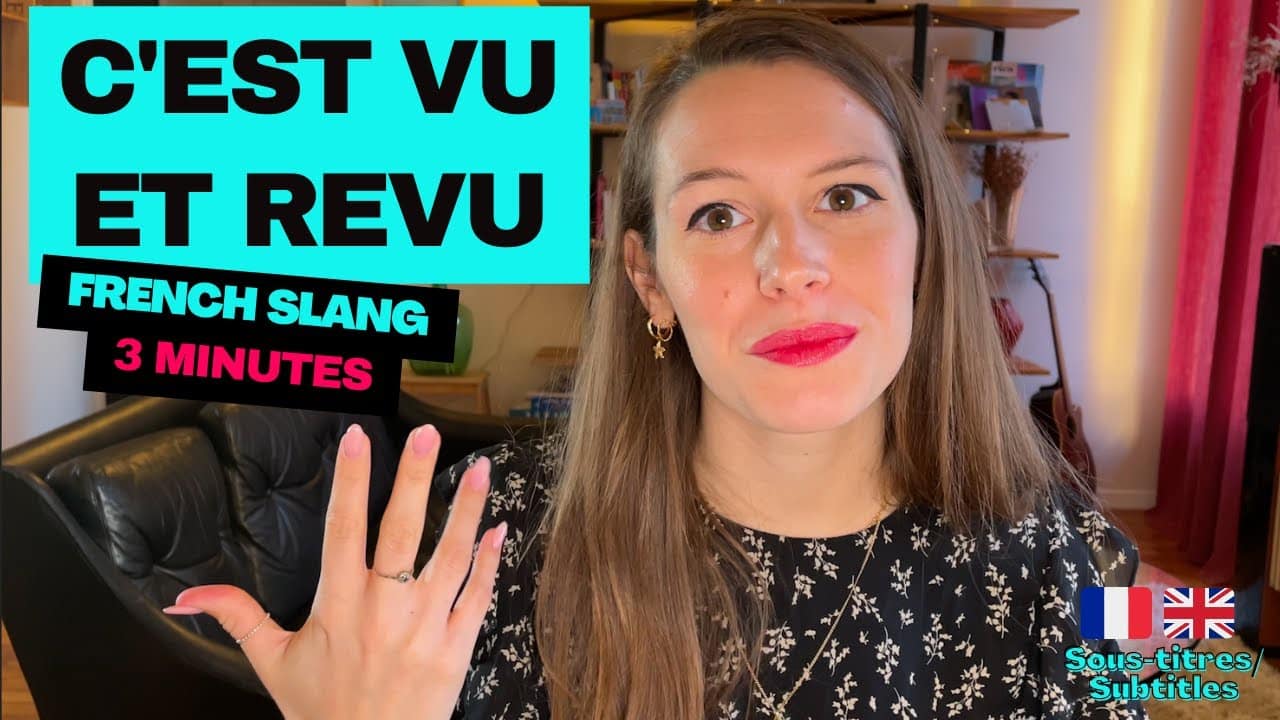
This expression is "c'est vu et revu" (it's been seen and seen again).
I personally love using this expression - I use it all the time.
You use it to talk about something that's not very original - you say "c'est vu et revu." It means it's really not original, you've already seen it a bunch of times. It's nothing new or innovative. Think of the English "been there, done that."
For example, if I'm watching TV and I see an ad with a storyline we've already seen ten times before - say a laundry detergent ad - I could say "c'est vu et revu," they should change up the story in their ads a bit.
You use it to say that an idea is a bit lame, that you've already seen it everywhere, that it's been done countless times before.
Here are more examples.
For instance, if I say I have no gift ideas for my boyfriend.
A friend might suggest: you could buy him a perfume. And I'd say: oh no, not perfume, "c'est vu et revu."
Meaning it's a very basic gift that anyone could give. Here's a second example. If I have guests coming over and I need to think of a dessert to make, and my husband suggests we could make an apple crumble, I could say: oh no, "c'est vu et revu" - crumbles are everywhere, I'd like to make something a bit more original.
I'll share one last example I saw on Instagram.
There's an Instagram account that curates annoying exchanges on Vinted.
Vinted is the network where you can buy and sell clothes.
There's a conversation between a seller and a buyer, and the person trying to buy doesn't write any complete sentences.
She only replies with very short words.
So the seller asks if she doesn't know how to write sentences. And the caption for this screenshot says: people who write full sentences, "c'est vu et revu."
Obviously, this is ironic. It's tongue-in-cheek. It's saying why bother doing what everyone does - we've already seen full sentences plenty of times, so let's be a bit more original in how we write. Like I said, it's humor.
I hope you understood this informal expression and that you'll be able to use it yourself.
If you liked this video, of course, don't forget to give it a thumbs up. And if you're new here, subscribe so you don't miss any of my videos. See you very soon!