Video Transcript
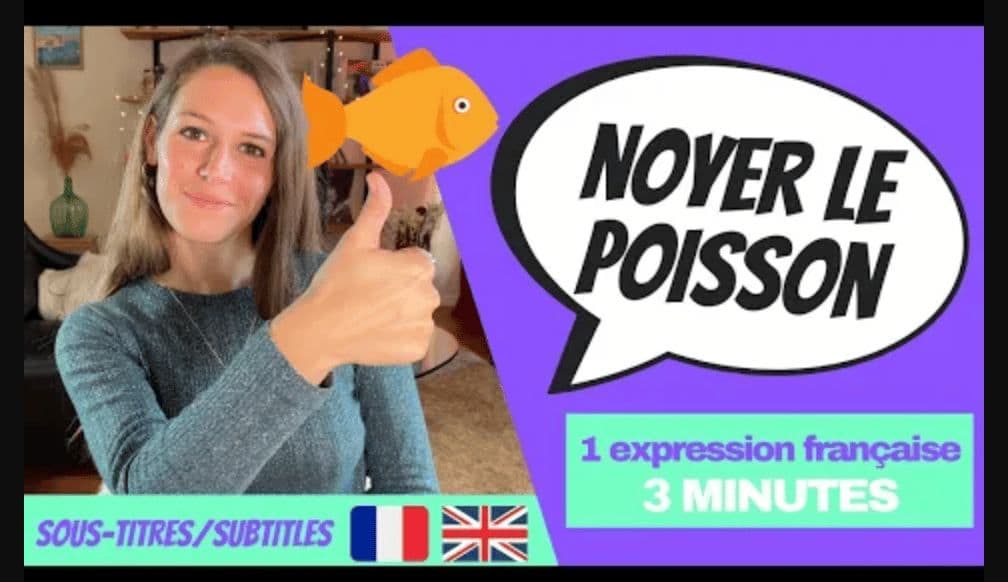
Welcome to this video format where we look at a French expression in just a few minutes. Today, we're going to look at the expression "noyer le poisson" (to drown the fish). This expression is a bit strange because drowning a fish is actually impossible.
Fish breathe in water. So let's see what this expression means, look at some examples, and find out where it comes from. When you say you're trying to "noyer le poisson," it means you're trying to change the subject in a conversation. You're talking with someone and a certain topic comes up.
And you don't want to talk about it, so you try to steer the conversation away from that subject. Maybe it makes you uncomfortable, embarrasses you, or you're not allowed to talk about it because you promised someone you wouldn't discuss it. So you try to "noyer le poisson" - to muddy the waters. You try to bury the topic and move on to something else in the conversation.
Let me give you some examples to help you understand better. Here's a first one. Politicians often try to "noyer le poisson" when they don't have the answer to a question. If you ask a politician how much a metro ticket costs in Paris, they might answer: "What matters isn't how much a metro ticket costs, but how much we can reimburse each year for people who use the metro."
You see, they've perfectly "noye le poisson." They didn't actually know the answer to the question, so they changed the subject. They concealed the fact that they didn't know by shifting the topic. Here's another example. Say you have a friend who is pregnant but hasn't told anyone yet, and someone says to you: "Have you noticed? Maria has really gained weight. Maybe she's pregnant."
And you're keeping the secret - you don't want to talk about it. So you'll try to "noyer le poisson," to steer the conversation toward talking about someone else. For example, you might answer: "Oh, I don't know, I haven't noticed. But have you seen Sandra? She's in her eighth month of pregnancy. She's really huge - she looks like she's about to pop!"
You've diverted the conversation - you've "noye le poisson." This expression actually dates back to a time when people would put lots of sauce on fish to hide the taste of fish that wasn't very fresh. They'd slather sauce all over it to mask the bad flavor. That's it for this expression and for today.
I hope you enjoyed this video. If you did, don't forget to give it a thumbs up. Feel free to tell me in the comments if there are expressions you'd like me to explain and put into context. I wish you all a wonderful day, and see you very soon!