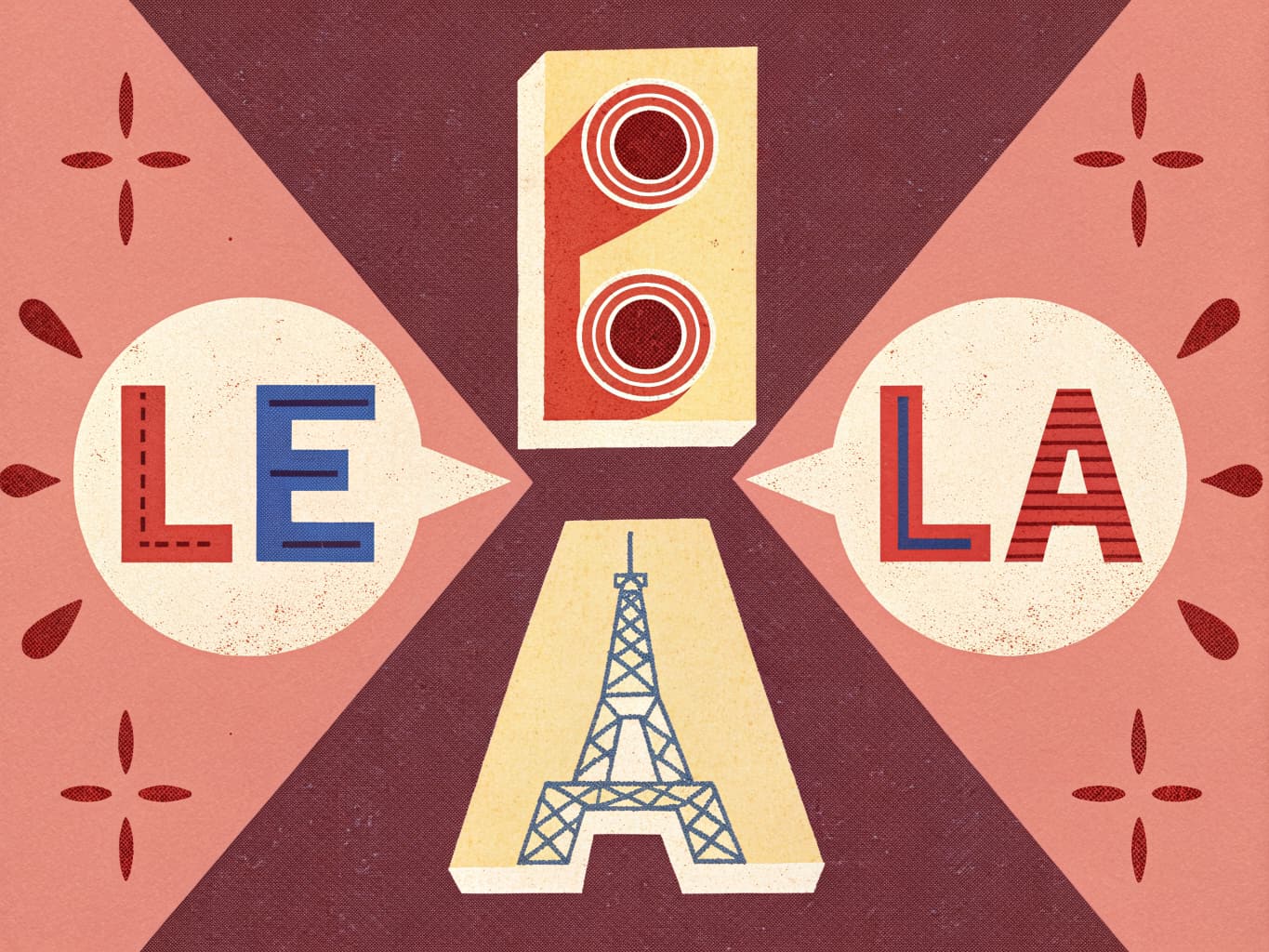
« La problème », « la silence », « une territoire »… I read and hear these mistakes every single week. Grammatical gender is one of the most frustrating aspects of French for learners, and I understand why - in many languages, nouns don't have a gender. In English, a table is neither masculine nor feminine. In French, it is: « une table », but « un bureau ». And nothing about the object helps you guess.
In French, every noun has a fixed gender - masculine or feminine - that you need to learn by heart. Some endings are reliable clues: words ending in -tion, -sion, -ance, -ence, -ure, -ée, -té are almost always feminine. Those ending in -ment, -age, -isme, -eur (abstract) are generally masculine. But hundreds of common words defy these patterns: « un problème », « un silence », « un musée » are masculine despite their -e ending. The only truly reliable method is to learn each noun with its article.
Reliable feminine endings
Some endings are feminine in over 90% of cases. If you memorize these, you already eliminate a large portion of errors:
- -tion / -sion: la situation, la décision, la conversation, la télévision
- -ance / -ence: la confiance, la patience, la différence, la violence
- -ure: la voiture, la nature, la lecture, l'aventure
- -ée: la journée, l'idée, l'arrivée, la soirée
- -té: la liberté, la sécurité, la qualité, la beauté
- -ie: la vie, la philosophie, l'énergie, la catégorie
When in doubt, if a word ends with one of these suffixes, you can use « la » or « une » with a high probability of being right.
Reliable masculine endings
On the masculine side, the patterns are slightly less clear-cut, but some endings are still very reliable:
- -ment: le moment, le gouvernement, le sentiment, l'appartement
- -age: le voyage, le fromage, le garage, le paysage
- -isme: le tourisme, le journalisme, le féminisme, le capitalisme
- -eur (abstract nouns): le bonheur, le malheur, l'honneur
- -oir: le soir, le miroir, le pouvoir, le devoir
- -eau: le gâteau, le chapeau, le bateau, le cerveau
Be careful though: « la plage » (beach) is feminine despite the -age ending, and « l'image » too. These are not absolute rules, but patterns that work in the vast majority of cases.
The words with the most mistakes
Here are the gender mistakes I correct most often with my students. These are real errors, taken from dictations, emails, and YouTube comments:
- ❌ « C'est la problème »
✅ « C'est le problème » - masculine despite the -e ending - ❌ « La silence »
✅ « Le silence » - masculine - ❌ « La plus grande musée »
✅ « Le plus grand musée » - masculine (and the adjective must agree!) - ❌ « Une sanctuaire »
✅ « Un sanctuaire » - masculine - ❌ « Une territoire »
✅ « Un territoire » - masculine - ❌ « Il y avait une espace de côté »
✅ « Il y avait un espace de côté » - masculine (in this sense) - ❌ « Je préfère le forêt »
✅ « Je préfère la forêt » - feminine - ❌ « Il faut un nuit dans un hôtel »
✅ « Il faut une nuit d'hôtel » - feminine - ❌ « Un bibliothèque »
✅ « Une bibliothèque » - feminine
Notice the trap? The words « problème », « silence », « musée », « sanctuaire », « territoire », and « espace » all end in -e, which makes you want to make them feminine. But they're masculine. The -e ending is NOT a reliable indicator of feminine gender in French.
The error that spreads: adjective agreement
The problem with gender is that it doesn't only affect the article. If you get the gender wrong, the adjective that follows is wrong too. And the possessive. And the demonstrative. One mistake triggers three more:
- ❌ « Cette voyage était magnifique »
✅ « Ce voyage était magnifique » - voyage is masculine - ❌ « Mon faute »
✅ « Ma faute » - faute is feminine - ❌ « Les chansons anciens »
✅ « Les chansons anciennes » - chanson is feminine - ❌ « Il est en très bon forme »
✅ « Il est en très bonne forme » - forme is feminine - ❌ « La Nouveau Zélande »
✅ « La Nouvelle-Zélande » - the adjective agrees in feminine
This is why gender is so important to master: it affects the entire sentence around the noun.
Partitive articles: « du » or « de la »?
Gender also determines the choice of partitive article (« du » for masculine, « de la » for feminine). Here again, mistakes are common:
- ❌ « Il y a du glace partout »
✅ « Il y a de la glace partout » - glace is feminine - ❌ « Il y a du bière disponible »
✅ « Il y a de la bière disponible » - bière is feminine
Same logic: if you know the noun's gender, you automatically know which partitive to use.
How to remember noun genders
The most effective method is to learn every new word with its article. Not « maison », but « une maison ». Not « bureau », but « un bureau ». It takes a small effort at first, but your brain will eventually associate the word and its gender automatically.
A few additional tips:
- Learn the reliable endings listed above - they already cover about 70% of cases
- Note the exceptions when you encounter them: « un problème », « un musée », « une plage »
- Read and listen to a lot of French - with enough exposure, « le problème » will eventually sound right naturally, without having to think about it
- When in doubt, ask yourself: have I heard this word with « le » or « la » before? Often, your ear knows, even if you can't explain why
NB: some words change meaning depending on gender. « Un espace » (space, room) and « une espace » (typographic space), « un poste » (a job) and « la poste » (the post office), « le mode » (mode, way) and « la mode » (fashion). These are rare cases, but they exist - one more reason to always learn the article with the noun.